


There are 4.5 billion people registered worldwide who suffer from parasitic infections (infestations).Furthermore, the number of people infected with helminths (worms) is constantly increasing.
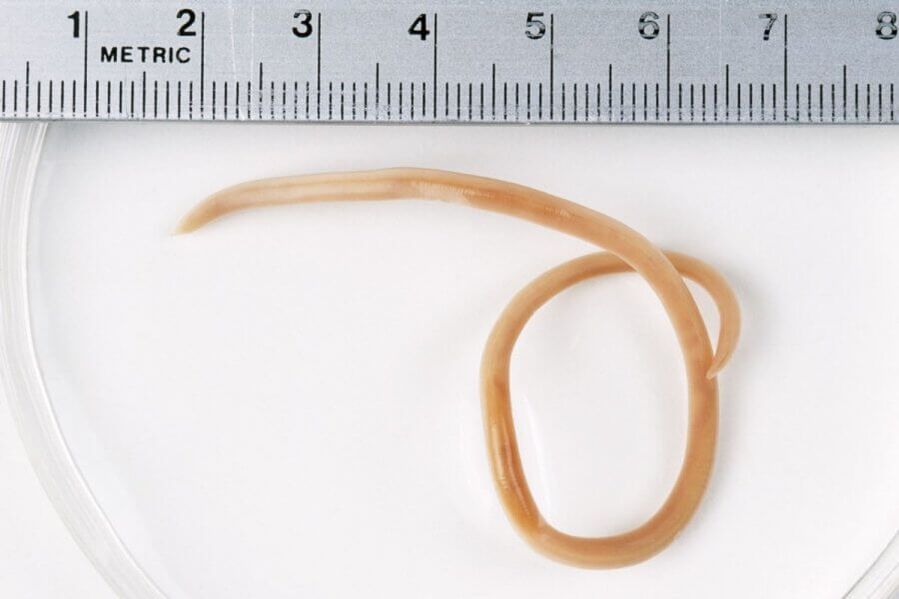
Causes of helminthiasis infection
It's not difficult to introduce worms into your body.Here are just a few causes of infection that are familiar to everyone from childhood:
- Insufficient hygiene.The desire to eat unwashed fruits and vegetables, not to wear gloves when working in the garden and not to pay attention to hygiene procedures leads to infection with various helminths.
- Addiction to street fast food.It's no secret that sellers of these foods do not always undergo medical examinations and often neglect basic hygiene.And their products are not stored in the best conditions.Lovers of street whites and pastels are another risk group.
- Love for exotic cuisines, including dishes based on raw fish and shellfish containing parasites.It is precisely the fans of sushi and rolls who are responsible for the increase in the incidence of worms, tapeworms, nematodes, roundworms and worms.
- Nthe ability to adequately protect yourself from infections while resting.Love for the “Turkish coast” has led to an increase in cases of infection with exotic helminthiasis - schistosomiasis, hookworm and dracunculiasis.After walking barefoot on an overseas beach, you can bring from your trip not only pleasant impressions, but also dangerous worms.
- Pet infectionwho often sleep with their owners.Anyone who likes to “kiss” their pet runs the risk of contracting parasites.
What parasites live in the human body
If an adult had the opportunity to look inside his body, they would be horrified:
- Roundworms –pinworms, roundworms, whipworms, nematodes, toxocara, trichinella.Large helminths accumulate in huge balls, obstructing the intestinal lumen and causing obstruction, requiring surgical treatment.Doctors remove an incredible amount of parasites from these people's intestines during surgery.
- Tapewormsappear among those who like to enjoy rare meat and raw fish.Causes digestive problems, anemia, allergies.Children experience seizures similar to epileptic seizures.The most dangerous helminth of this group is the echinococcus, whose larvae form huge cysts in the human body.When they rupture, the parasites disperse throughout the body.The infection can be fatal.
- Worms– worms, flukes and flukes are dangerous parasites that suck blood from the vessels of the liver, pancreas, intestines and bladder.
- Protozoa– leishmania, amoeba, lamblia, etc.Although these tiny parasites are only visible under a microscope, they can cause dangerous complications, including intestinal perforation and liver abscesses, which are fatal.
By what signs can you suspect the presence of “strangers”: if your stomach hurts, it means that someone lives in it
Signs of the presence of helminths:
- Abdominal pain- the most common sign of helminth infection.It can be constant, periodic, affecting certain areas of the abdomen.Pain in the right hypochondrium during helminthiasis indicates damage to the liver and gallbladder by worms.
- Digestive disorders– diarrhea, constipation, irregular bowel movements.Sometimes patients see crawling segments of worms or even entire parasites in their stool.Impaired food absorption and gastrointestinal dysfunction lead to weight loss.
- Anemia.Worms suck blood from the body and interfere with the digestion of food.The human host does not feed on itself, but on worms.Patients complain of weakness, fatigue, loss of strength and dizziness.
- Urinary tract damagecaused by parasites that live in the kidneys and bladder.Patients complain of lower back pain and swelling.Sometimes traces of blood are visible in the urine.
- Slow chronic vaginitis.Roundworms and pinworms crawl from the anus into the genital tract, causing vaginal dysbiosis and provoking the development of candidiasis.Women are treated for itching and discharge, without realizing that the problem is parasites.
- Skin manifestations.Worm infection poisons the body and depresses the immune system, causing allergies.Rashes range from small blisters to large focal areas.
- Inflammation of the mucous membraneand itching in the anal region caused by irritation from crawling worms.
- General deterioration of health.Weak immunity, poor digestion and anemia weaken the body, which cannot resist infections.A person is haunted by constant colds, acute respiratory infections and acute respiratory viral infections.
Why ultrasound is more effective than traditional exams for worms and other parasites
Giving stool or scraping does not always reveal worms.The fact is that parasites have a certain development cycle and do not always lay eggs.There is a whole group of extraintestinal helminthiases, in which worms live outside the intestines.In this case, a stool test will not provide any information.
Ultrasound of the abdominal cavity shows changes characteristic of the presence of parasites in the liver and pancreas.It is harmless, non-traumatic and can be used multiple times.
If the doctor does not find live helminths and 100% signs of their presence on ultrasound, he will suspect an infection and prescribe an additional examination.It is also helpful to have an ultrasound if tests for worms are positive.The study will show where the parasites are hiding.
Signs of helminthiasis determined by ultrasound of the abdominal cavity - semi-living organs and live worms
When examining the gastrointestinal tract using modern 3D and 4D devices, doctors often see live parasites in the intestines.If helminths are not detected, their presence can be suspected by an enlarged pancreas, compacted in the head region.The spleen is also very large.
The liver is enlarged due to parasitic infection with worms, trematodes and tapeworms.Reveals areas of dystrophy that prevent the organ from functioning.
The gallbladder also suffers.Patients experience stagnation of bile, causing pain in the right hypochondrium.Sometimes, bladder function is so impaired that the organ is not even detected on ultrasound.
The presence of parasites leads to the formation of abscesses - life-threatening purulent liver lesions.In 85% of cases, abscesses form in a lobe of the liver.Other departments suffer less frequently.Purulent lesions are characteristic of hepatic amoebiasis - infection by a protozoan - an amoeba that penetrates the liver region from the intestine.
Significant changes in the liver are observed during echinococcosis, a parasitic disease in which cavities filled with helminth larvae form inside the organ.Ultrasound shows round formations with clear boundaries.These are cysts that contain parasites.Over time, calcium is deposited around echinococcal lesions.These formations have a dense structure, therefore, on ultrasound, they appear lighter than the surrounding tissues.
With prolonged infection, large cysts with partitions are formed, similar to wheel spokes or large honeycombs.There is destruction of the bile ducts.Doppler examination reveals a disturbance in blood flow.
For lovers of Japanese cuisine.Parasites - as a gift
A wide variety of parasites are found in fans of Asian exoticism, but the most common is opisthorchiasis - Chinese worm infection.The source of helminths is unprocessed fish containing parasites.
At the beginning of the disease, ultrasound reveals eosinophilic infiltrates in the liver and gallbladder – dense formations with clear boundaries.If the fight against helminths is postponed until better times, foci of dead cells will appear in these organs, looking like spotted areas, and the liver ducts will lose their elasticity.The situation can result in the development of liver failure.
If the urinary tract is a victim of parasites
Echinococcus affects not only the liver but also the kidneys.When the parasite penetrates the kidney tissue, a single-chamber cyst (bladder) containing larvae forms.Gradually increasing in size, the hydatid cyst destroys the organ.Large parasitic cysts adhere to the liver, spleen and intestines.
Schistosomiasis is contracted by those who like to walk barefoot on the hot beaches of overseas countries.The parasite larvae penetrate the bloodstream through the skin and are transported to the bladder with the blood.Installed there, they cause the appearance of impactions - infiltrates that appear in response to irritation of the bladder walls.As the infection spreads, the kidneys are affected.
Enzyme immunoassay blood test - we bring helminths into drinking water
This test can detect infection with one or more types of parasites.It is carried out for the presence of roundworms, toxocara, trichinella, opisthorchis worms, echinococcus, Chinese worms, etc.
The principle of the test is based on the body's immunological response to the presence of helminths.Worm infection causes the production of protein antibodies, which are detected during analysis.Since each parasite causes the formation of a certain immunoglobulin, the test results show which helminths are in the human body.
The analysis reacts to all forms of parasites - eggs, larvae, adult worms.The accuracy is more than 90%.The exam shows not only the presence of the infection, but also its degree.
After treatment, the test is repeated.A positive result can be observed some time after the death of the parasites.The concentration of immunoglobulins will gradually decrease over several months.Then the analysis will be “clean”.For the study, blood is taken from a vein on an empty stomach in a volume of 3-5 ml.The analysis is done twice.
Ultrasound and immunoglobulin tests can identify helminthiasis and initiate treatment.Thanks to its use, the number of cases of incorrect diagnoses leading to complications has decreased.The main thing is to immediately consult a doctor if helminth infestation is suspected.